Chapter 8 Sabbath Years, Years of Release, and Jubilee: Rest / Release / Redeem / Reset
Chapter orientation The Four-R Framework tests whether institutions permit rest, end permanent bondage, preserve a path of redemption, and prevent control or failure from hardening across generations. |
|---|
8.1 The Four-R Framework
Section titled “8.1 The Four-R Framework”Tier C — Teaching and institutional framework
The Four-R Framework organizes biblical directions for economics and governance. Rest refers to Sabbath rhythms that interrupt endless production and permit people, land, and institutions to recover. Release refers to the termination or restructuring of claims that would otherwise become permanent debt bondage. Redeem protects the possibility of regaining land, liberty, livelihood, and a stable place in the community. Reset prevents the control of basic resources and the consequences of failure from becoming permanently inherited.
Rest / Release / Redeem / Reset is not the only possible translation of Scripture, and it is not a completed statute. It is a diagnostic framework. It asks whether an institution leaves space for worship and recovery; whether debt has an endpoint; whether people can return to a life foundation; and whether power, land, wealth, or exclusion can be periodically reviewed and reauthorized.
| R | Biblical direction | Institutional question |
|---|---|---|
| Rest | Sabbath rest, land rest, worship, restoration, and dependence on God. | Does the system interrupt endless production and protect time for people, creation, maintenance, and worship? |
| Release | Debt release and an end to permanent personal bondage. | Can claims expire, be restructured, or cease to enslave households across generations? |
| Redeem | A road back to land, liberty, livelihood, and family foundations. | Can a person who loses a life foundation regain secure participation rather than face permanent exclusion? |
| Reset | Jubilee reordering of land, servitude, and entrenched control. | Are control rights, charters, and inherited advantages periodically reviewed rather than assumed permanent? |
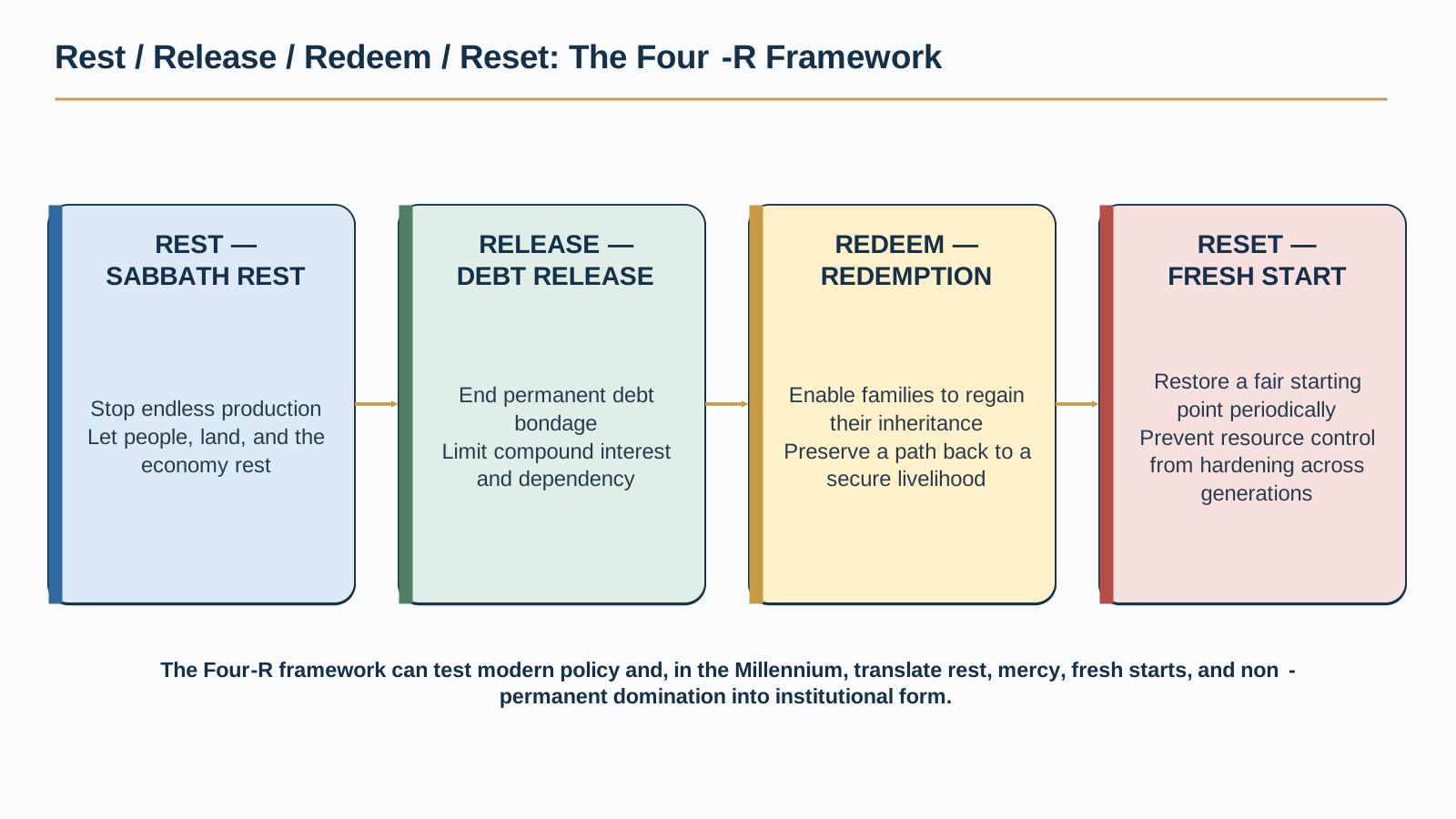
Figure — Rest / Release / Redeem / Reset.
8.2 Rest: Sabbath and Provision
Section titled “8.2 Rest: Sabbath and Provision”Tier B–C — Scriptural synthesis and institutional inference
Sabbath is more than private leisure. It is a public rhythm that stops work, limits the demands of production, gives rest to servants and animals, permits land to recover, and teaches dependence on God (Exodus 23:10–12; Leviticus 25:1–7). Rest challenges an economy that treats maximum speed, constant availability, and continuous expansion as unquestionable goods.
In the Millennium, Rest may take the form of shared worship, maintenance periods, land-rest cycles, ecological limits, common festivals, and protection from compulsory overwork. Rest does not reject diligence or urgent service. It prevents the system from consuming people and creation in the name of output. It also exposes whether provision depends on fear-driven hoarding or on disciplined trust, reserves, and mutual responsibility.
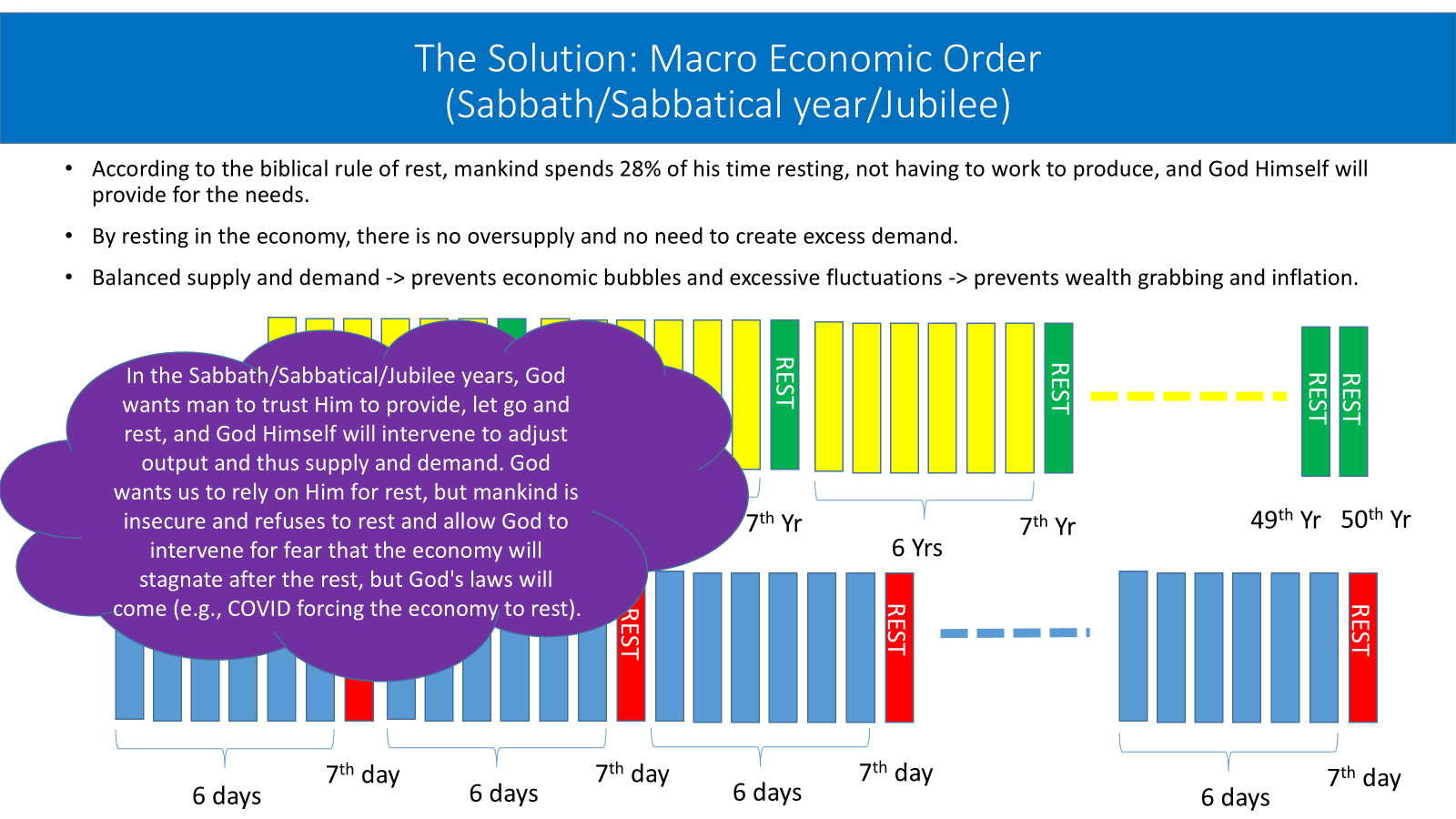
Figure — Sabbath, sabbatical year, and Jubilee as a teaching model of economic rhythm and provision.
8.3 Release: Preventing Debt from Becoming Permanent Bondage
Section titled “8.3 Release: Preventing Debt from Becoming Permanent Bondage”Tier B–C — Scriptural direction and institutional inference
Deuteronomy 15 establishes a rhythm of release that prevents debt from becoming permanent subordination. Release does not deny responsibility, excuse fraud, or make every promise meaningless. It limits the power of a fixed claim to control a person indefinitely when life circumstances, disaster, poverty, or systemic imbalance have made ordinary repayment destructive.
For basic living assistance, disaster recovery, essential housing, and emergency care, support may appropriately be interest-free, income-sensitive, deferrable, or forgivable. Productive projects may use risk-sharing arrangements in which returns depend on actual outcomes rather than fixed compounding regardless of success. Any modern release system must also protect depositors, distribute losses fairly, address moral hazard, and prevent lenders from withdrawing all support as a release date approaches.
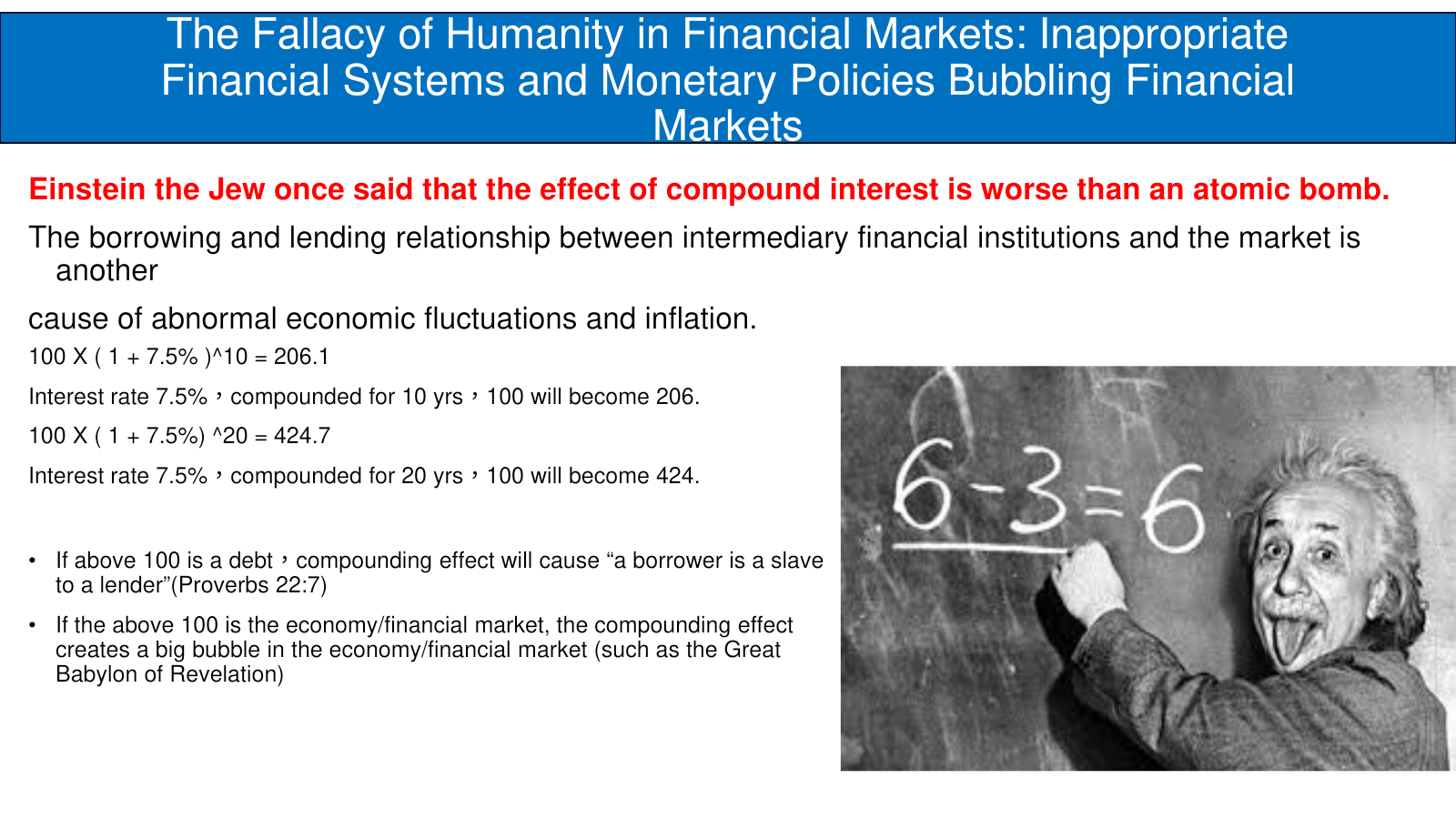
Figure — Compound interest, financial-market expansion, and the ethics of permanent claims.
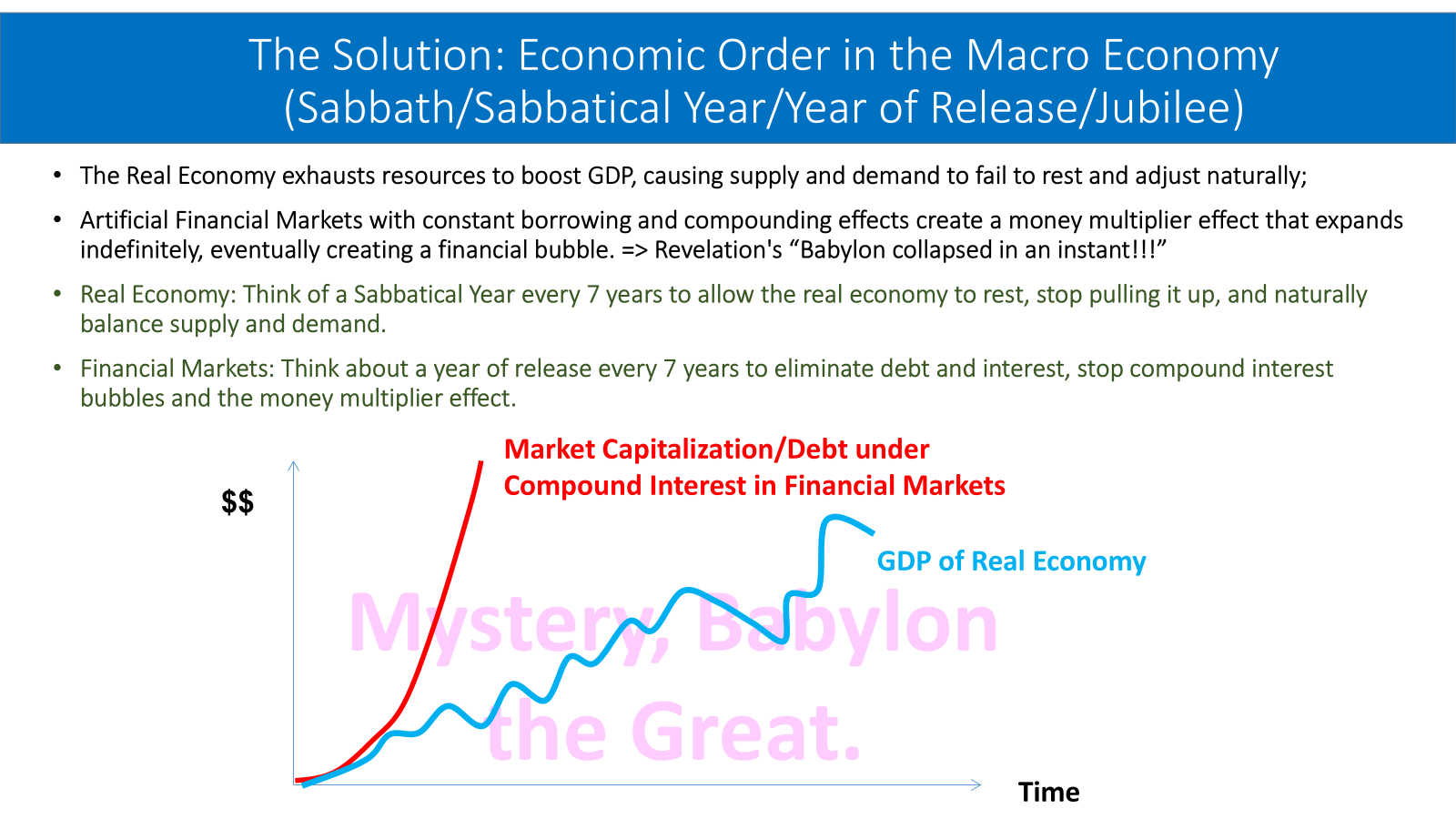
Figure — Periodic release and the divergence between real output and compounding financial claims.
8.4 Redeem: Protecting Inheritance and the Foundations of Life
Section titled “8.4 Redeem: Protecting Inheritance and the Foundations of Life”Tier B–C — Scriptural direction and institutional inference
Redemption in Leviticus 25 preserves a road by which land, freedom, and household foundations can be recovered. The principle is not that every transaction is reversed instantly or that buyers have no legitimate interests. It is that economic distress must not permanently erase a family’s participation in the land, community, and means of life.
Modern institutional translations can include fair repurchase rights, portable housing equity, hardship transfers, restoration of legal identity, access to productive assets, second-chance credit, and paths back into education or work. Redemption differs from charity alone. Charity relieves an immediate need; redemption restores agency, standing, and the ability to participate again without permanent stigma or dependence.
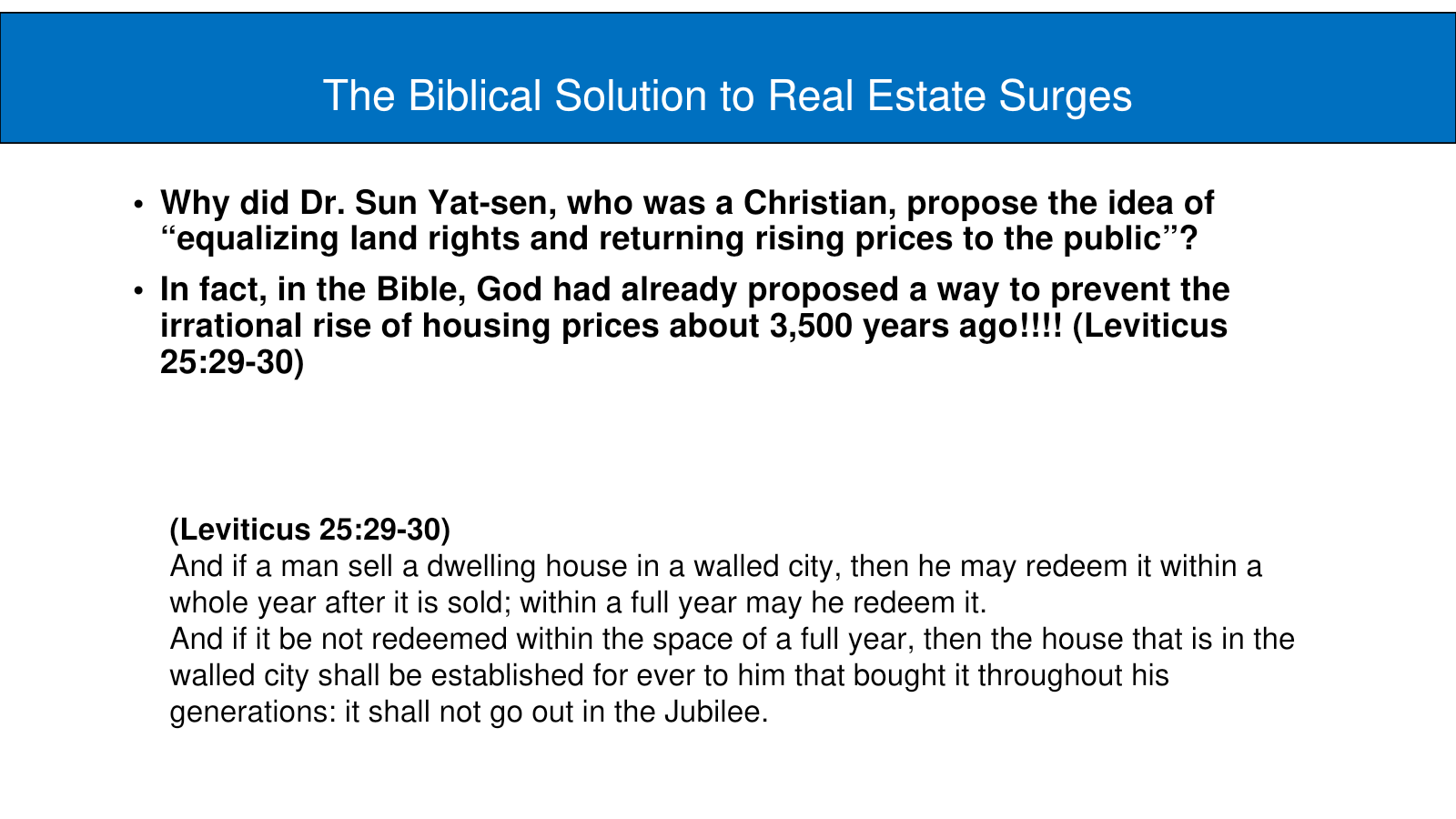
Figure — Biblical reflection on land, housing, and a right of redemption.

Figure — Seller’s one-year repurchase right as an anti-speculation teaching illustration.
8.5 Reset: Jubilee and the Great Reordering
Section titled “8.5 Reset: Jubilee and the Great Reordering”Tier C — Institutional inference from Jubilee
Reset addresses arrangements that gradually harden into permanent control. Land concentration, hereditary debt, indefinite servitude, monopolized necessities, perpetual corporate charters, and governance rights without review can turn one generation’s advantage into another generation’s exclusion. Jubilee interrupts that process.
A modern or millennial reset need not destroy buildings, tools, knowledge, or productive organizations. It can review who controls them, for what purpose, for how long, under what conditions, and for whose benefit. Charters may expire or require reauthorization; land-use rights may return to a trust; offices may rotate; accumulated claims may be settled; and basic access may be restored. Reset preserves useful capacity while judging entrenched domination.
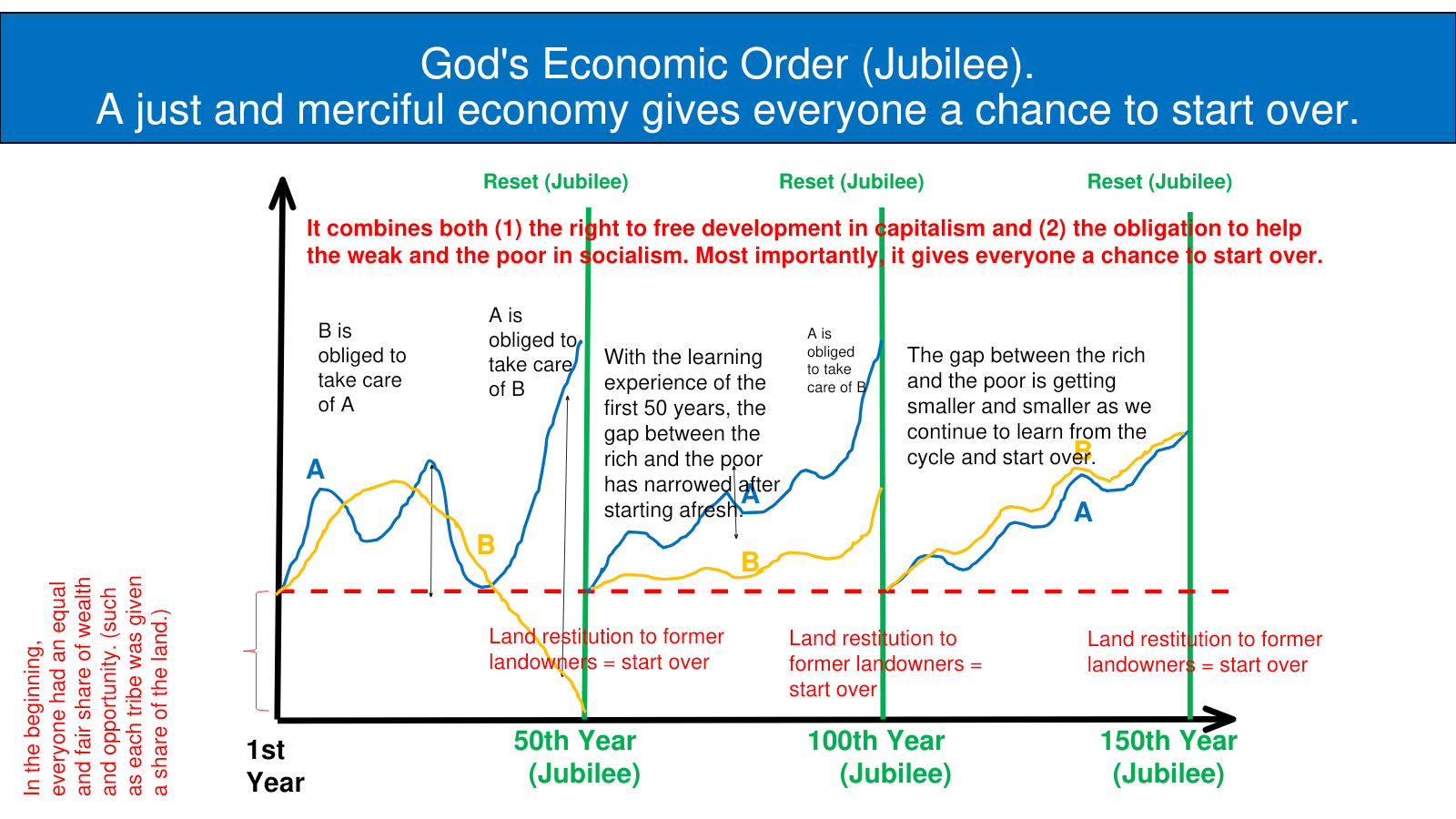
Figure — Jubilee, renewed opportunity, and limits on intergenerational hardening.
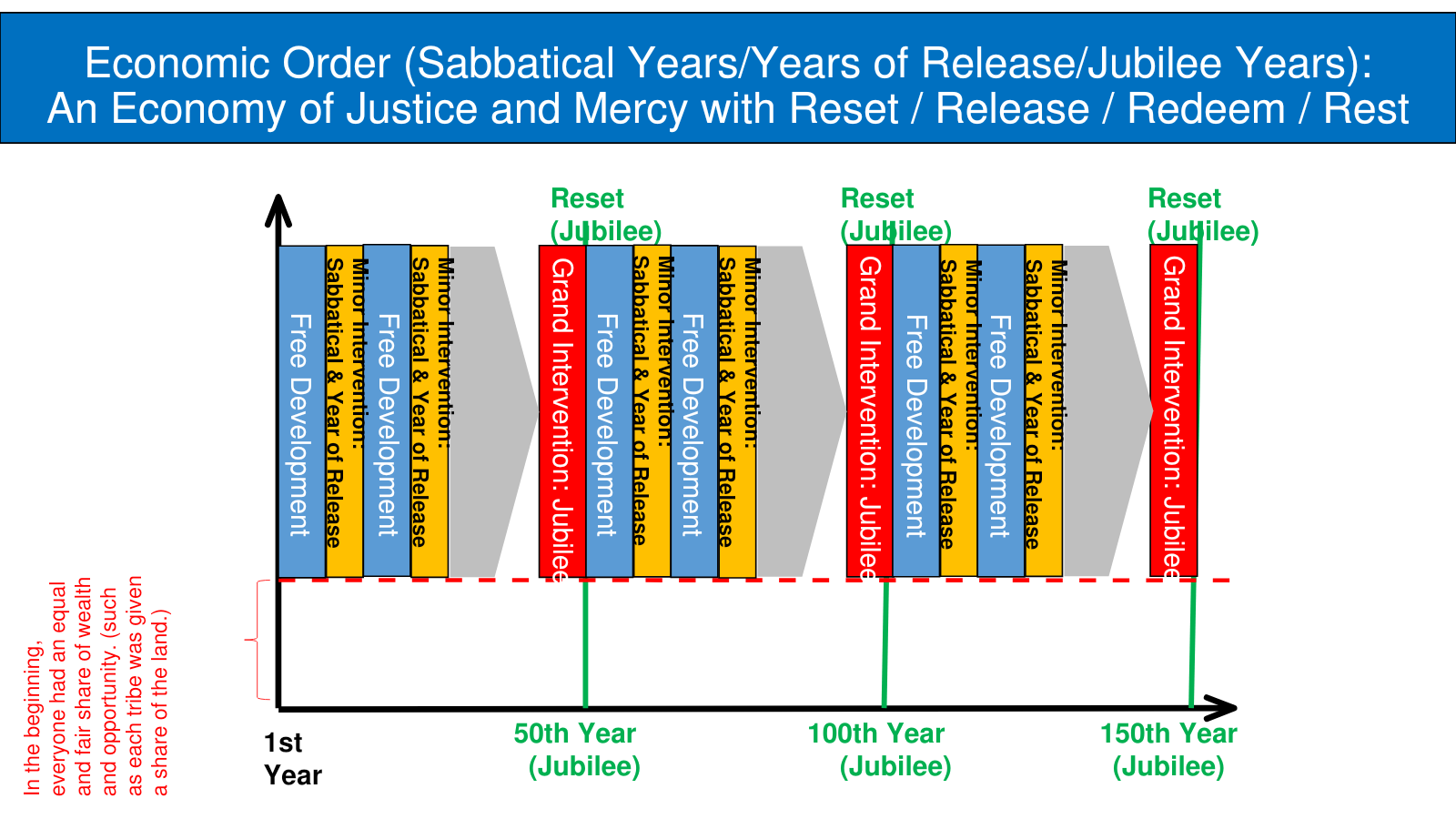
Figure — Sabbatical release and Jubilee: smaller adjustments and larger resets.
8.6 The “28 Percent Rest” Teaching Illustration: 10 Percent Offering plus 18 Percent Mercy
Section titled “8.6 The “28 Percent Rest” Teaching Illustration: 10 Percent Offering plus 18 Percent Mercy”Tier D — Pedagogical estimate, not a revealed economic formula
Earlier teaching material used an illustrative calculation in which approximately one seventh of time is Sabbath rest, one seventh of years is a land-rest year, and additional Jubilee rhythms are combined to suggest a broad proportion of rest. A separate estimate associated ten percent with offerings and eighteen percent with charitable or community provision, producing a symbolic twenty-eight percent. The intention was to teach that God’s provision can support worship, rest, and care rather than that every household or state must impose a precise universal rate.
These percentages must not be presented as a biblical tax code, an empirical macroeconomic law, or a promise that every loss will be mechanically replaced. Scripture contains multiple kinds of tithes, offerings, gleaning, hospitality, and care, and their historical administration is complex. The legitimate insight is qualitative: worship, rest, generosity, and mercy belong inside economic design, not outside it as optional leftovers after maximum production.
Interpretive boundary The “28 percent” and “18 percent” figures are teaching illustrations. They are not direct commands, calibrated policy parameters, or proof of a particular macroeconomic outcome. |
|---|
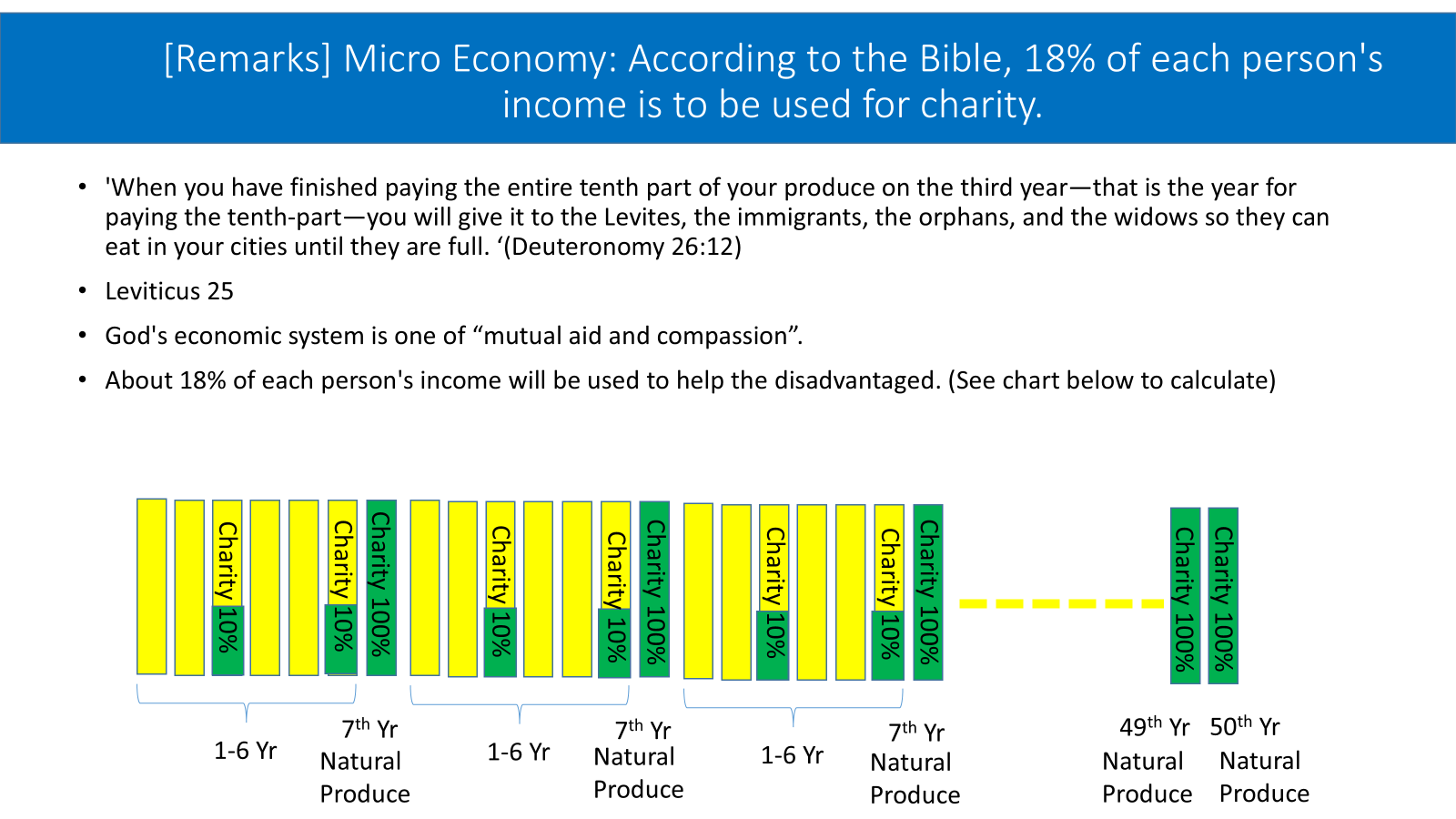
Figure — The 18 percent mercy teaching estimate and community provision.
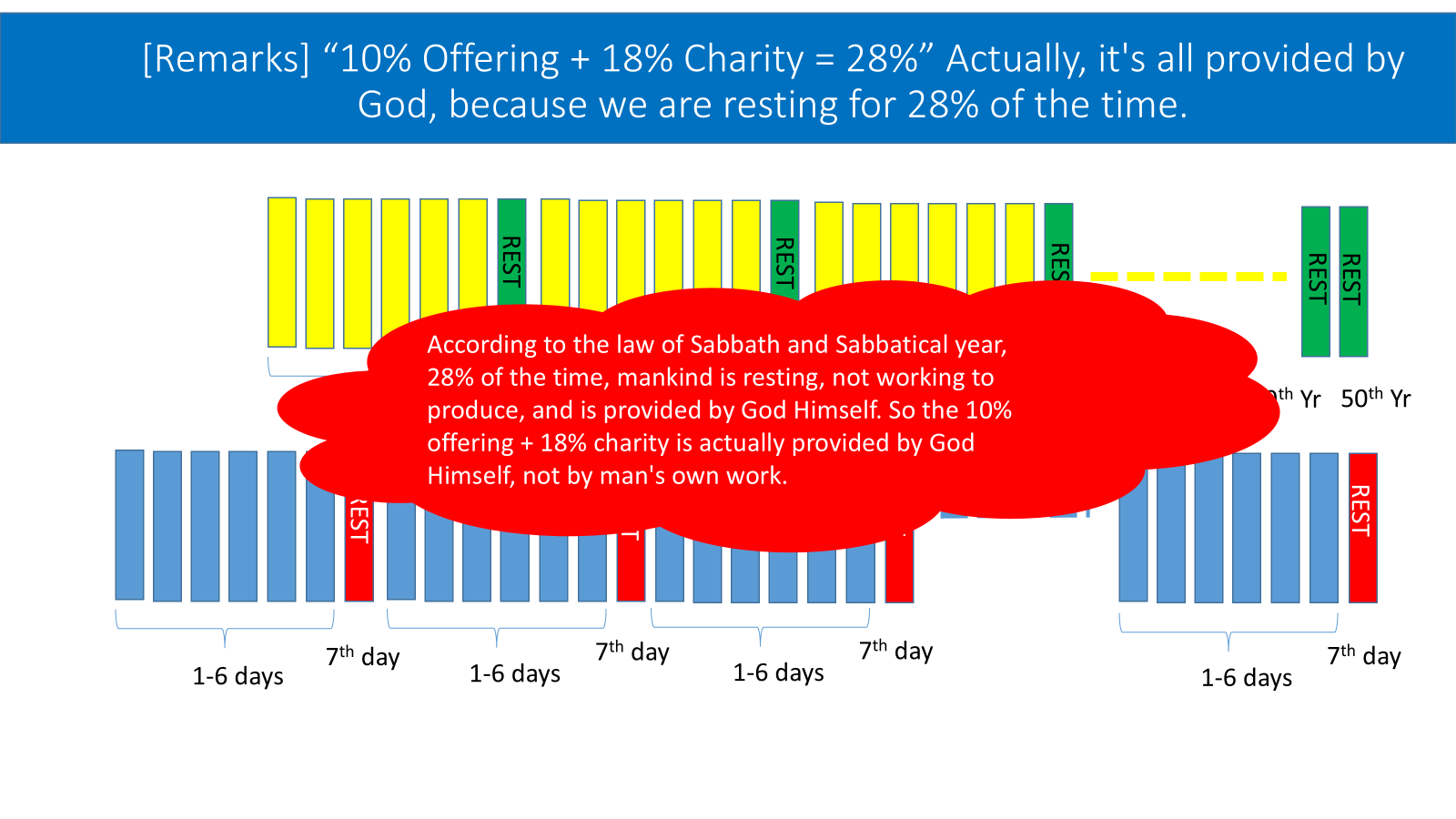
Figure — The 10 percent offering plus 18 percent mercy teaching illustration.
8.7 A Possible Twenty Jubilee Cycles during the Millennium
Section titled “8.7 A Possible Twenty Jubilee Cycles during the Millennium”Tier D — Exploratory scenario
A one-thousand-year period contains twenty fifty-year intervals. This makes it possible to imagine twenty Jubilee-style cycles of review, release, reallocation, or reauthorization. The arithmetic is simple; the conclusion is not revealed. Scripture does not explicitly state that the Mosaic Jubilee calendar will operate unchanged throughout the Millennium.
The thought experiment is nevertheless useful. It asks what long-lived institutions would look like if no land right, corporate charter, office, concession, or debt claim could assume permanent continuation. A recurring fifty-year review could protect new generations from inherited lock-in while allowing buildings, knowledge, and productive systems to continue under renewed stewardship. The exact objects, timing, exceptions, and authority remain Tier C or D matters for design and discernment.
8.8 Expected Governance Benefits of the Four-R Framework
Section titled “8.8 Expected Governance Benefits of the Four-R Framework”Tier C — Institutional inference
Together the Four Rs reduce several systemic risks. Rest restrains overwork, ecological exhaustion, and deferred maintenance. Release limits debt spirals and the use of compound claims to control people. Redeem preserves a path back to livelihood and community participation. Reset prevents permanent control of land, organizations, offices, and necessities.
The framework also creates new governance obligations. Institutions must define who qualifies, who bears cost, how fraud is prevented, what reserves are required, how rights are valued, how decisions can be appealed, and how vulnerable people are protected from spiritual or political coercion. Mercy without governance may become arbitrary favoritism; governance without mercy may make bondage efficient. The Four Rs require both compassion and disciplined accountability.
Benefits and safeguards of the Four Rs
Section titled “Benefits and safeguards of the Four Rs”| Principle | Potential benefit | Risk that must be guarded against |
|---|---|---|
| Rest | Restore land, reduce overwork, limit overproduction, and rebuild trust. | Without provision it may harm vulnerable people; distinguish rest from institutional paralysis. |
| Release | Prevent debt bondage, limit permanent compound claims, and restore participation. | Creditor risk, moral hazard, and public burden require transparent design. |
| Redeem | Protect family inheritance and limit permanent consequences of forced sale. | Do not turn family rights into a closed privilege or a basis for excluding outsiders. |
| Reset | Offer a new start, limit permanent concentration, and advance intergenerational justice. | Do not erase faithful fruit, skills, or every asset; define precisely what is reset. |