Chapter 3 The Biblical Metanarrative, the Wilderness–Canaan Analogy, and the Eschatological Timeline
Chapter orientation Creation, covenant, exodus, prophetic perspective, and the sequence of Revelation establish the movement from the present age to the New Creation. |
|---|
3.1 Humanity’s Original Vocation in Eden
Section titled “3.1 Humanity’s Original Vocation in Eden”Tier B — Scriptural synthesis
Work is not a consequence of the Fall. Before human sin, humanity had already been entrusted to cultivate and keep the garden, to be fruitful, to exercise dominion, and to receive creation as gift and responsibility (Genesis 1:26–28; 2:15). The Fall introduced toil, thorns, alienation, domination, violence, and death—not work itself.
Neither the Millennium nor the New Creation should therefore be imagined as permanent inactivity. Work is restored as worship, creativity, cultivation, care, learning, and service. This changes how vocation is evaluated today. A calling is not merely a mechanism for income or status; it is a form of stewardship through which gifts, time, technology, and relationships are brought under the King’s purpose.
3.2 Covenant, Land, and King
Section titled “3.2 Covenant, Land, and King”Tier B — High-confidence synthesis
The Abrahamic covenant joins land and descendants to blessing for all nations. The Davidic covenant promises a descendant whose reign will be established. The New Covenant promises forgiveness, a new heart, the law written within, and the Spirit of God (Genesis 12, 15, 17; 2 Samuel 7; Jeremiah 31:31–34; Ezekiel 36:24–28).
Within the premillennial model, Christ’s Millennial Kingdom is the stage in which these promises receive public and historical manifestation within the earthly order. Land is not detached from covenant and responsibility; kingship is not detached from justice; and inner renewal is not replaced by external administration. The covenants converge in Christ, who blesses the nations, fulfills the royal promise, and establishes the conditions for faithful life under His rule.
3.3 The Exodus, Wilderness, and Canaan Analogy
Section titled “3.3 The Exodus, Wilderness, and Canaan Analogy”Tier B — Scriptural analogy
The wilderness was Israel’s transitional season of leaving Egypt’s habits, learning God’s provision and law, and being tested before entering the inheritance. First Corinthians 10 and Hebrews 3–4 principally use the wilderness story as a warning to the church today. The present age therefore contains a strong wilderness dimension: God forms His people while they have not yet entered the final promised rest.
By analogy, the Millennium is transitional in relation to the New Creation. It functions as a public practicum of governance with Christ and as a disclosure of the human heart. Yet, in its land, kingdom, cultivation, houses, and public reign, it resembles Canaan more than a barren wilderness. It is a real inheritance and a restored order, but not yet the final consummation. Only the New Heavens and New Earth constitute the complete and eternal rest.
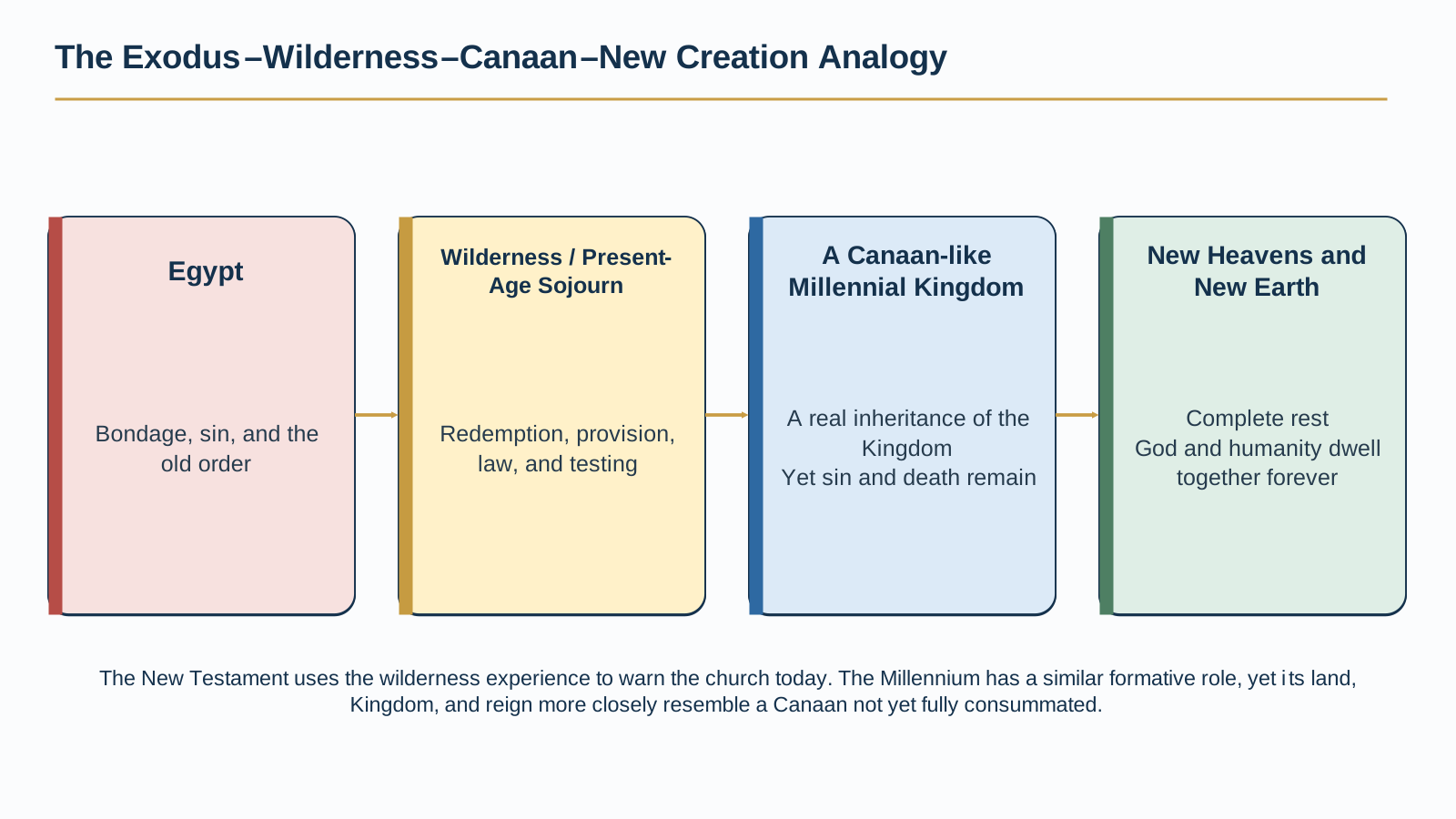
Figure — Exodus, wilderness, Canaan, the Millennium, and the New Creation as a bounded analogy.
3.4 Isaiah 65 and Prophetic Foreshortening
Section titled “3.4 Isaiah 65 and Prophetic Foreshortening”Tier B — Integrated prophetic interpretation
Isaiah 65 uses the language of new heavens and a new earth while also speaking of building houses, planting vineyards, bearing children, long life, death at one hundred years, and the continued presence of a sinner. Revelation 21, by contrast, explicitly states that death is no more. A premillennial model can account for the tension through prophetic foreshortening: Isaiah sees the initial renewal of the Messianic Kingdom and the ultimate New Creation within one distant vista, while Revelation 20–22 unfolds the sequence into two stages.
This paper therefore treats Isaiah 65:20–25 chiefly as Tier B evidence concerning mortality, longevity, housing, agriculture, work, and family life among ordinary residents of the Millennium. Revelation 21–22 remains Tier A evidence for the final order in which death and the curse are absent. The distinction protects both passages from being forced into a flat chronology.
3.5 Timeline from the Present Age to the New Creation
Section titled “3.5 Timeline from the Present Age to the New Creation”Tier B — Scriptural synthesis
The event sequence is: the present age of witness and waiting; the public return of Christ; the binding of Satan; the first resurrection and the saints’ reign with Christ for one thousand years; the release of Satan and final rebellion; the defeat of evil; the Great White Throne judgment; and the New Heavens and New Earth. The sequence provides the temporal framework for all later institutional analysis.
The timeline guards against confusing the hope of Christ’s return with human political construction. It also prevents transitional tools from being treated as eternal. The church may learn skills of stewardship, mutual aid, just governance, and creation care today, but it does so as witness and preparation, not as the sovereign builder of the age to come.
| Stage | Central reality | Institutional implication |
|---|---|---|
| Present age | The church bears witness under conditions of sin, suffering, and incomplete justice. | Cultivate faithfulness, holiness, gifts, mutual aid, transparent governance, and resilient local capacity. |
| Return of Christ | The King appears publicly and defeats opposing powers. | Authority is re-centered in Christ, not captured by a present institution. |
| Millennial Kingdom | Satan is restrained; the saints reign; nations and mortal residents remain. | Law, education, restoration, work, and accountable delegated governance continue. |
| Final rebellion and judgment | Satan is released; human allegiance is exposed; final judgment follows. | No institution can replace regeneration or guarantee inward love of the King. |
| New Heavens and New Earth | God dwells fully with humanity; death and curse are gone. | Transitional coercive and survival-oriented institutions give way to eternal service and fellowship. |
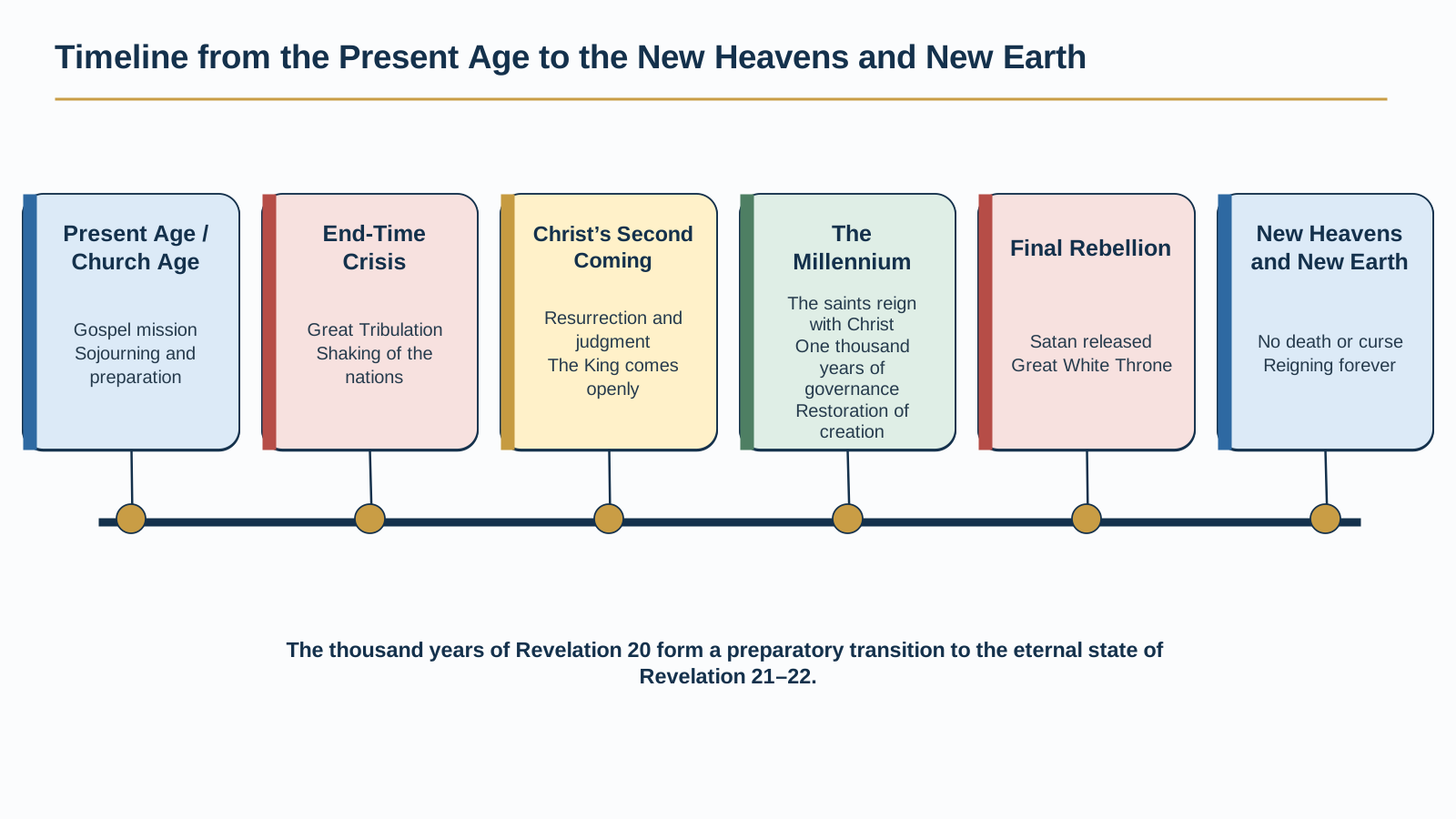
Figure — Timeline from the present age to the New Creation.